
What is SunSolve Power?
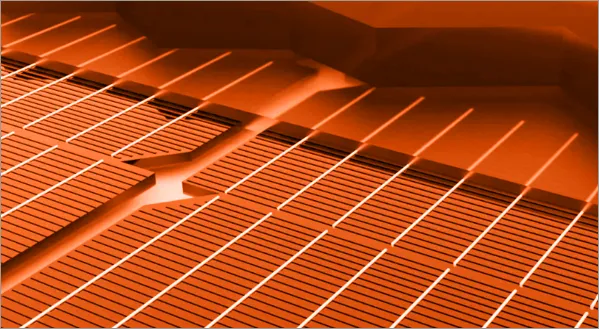
SunSolve Power determines the optical and electrical performance of a PV cell or module under a chosen illumination source. The optical behaviour is simulated by ray tracing and thin-film optics, while the electrical behaviour is simulated by equivalent circuits.
SunSolve helps researchers determine how a module’s output power is affected by materials, texture, films, cell layouts, electrical mismatch, polarisation, incident spectrum, and much more. Let us know what features we could add to help your research!
SunSolve is available to users with a subscription to PV Lighthouse.
SunSolve has been cited in over 100 academic papers.
Key capabilities
Section titled “Key capabilities”Flexible cell structures: Simulates conventional, PERC, TOPCon, HJT and IBC cells, as well as thin film technologies like CdTe, CIGS, amorphous silicon and perovskite devices. Supports tandems and multi-junction stacks.
Detailed optical and electrical outputs: Provides wavelength-dependent absorption in every material, reflectance and transmittance , series resistance of each component, external quantum efficiency , full IV curves, mismatch loss, depth-dependent generation in substrates and films, and colour outputs for visual comparison.
Advanced optical features: Handles any number of films and layers, including non-uniform film thicknesses and effective media to represent complex material mixtures. Free-carrier absorption models are included, with applications such as modelling the impact of doping levels in polysilicon.
Surface texturing and scattering: Models pyramids, V-grooves and isotexture, including texture-on-texture structures, with detailed treatment of scattering and backsheet reflection.
Module-level design flexibility: Supports a wide range of cell shapes and layouts, grid patterns and finger and ribbon cross sections, along with bypass diodes for realistic module-level performance.
Illumination and operating conditions: Offers many illumination options so users can explore device behaviour across different spectra, incidence angles and operating scenarios.
Custom datasets: Allows users to upload custom data for materials, reflectors, spectra and collection efficiency.
Rapid solving: Uses distributed processing to solve problems in parallel, enabling ray-tracing results to be achieved within seconds.
Sweeping and optimisation of inputs: Includes the ability to modify inputs automatically using either simple sweeping or advanced optimisation based on genetic algorithms.